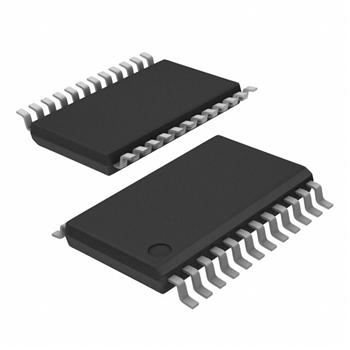
TPS5110PW 供应商
TPS5110PW 属性参数
- 标准包装:60
- 类别:集成电路 (IC)
- 家庭:PMIC - 稳压器 - 线性 + 切换式
- 系列:-
- 拓扑:降压(降压)同步(1),线性(LDO)(1)
- 功能:任何功能
- 输出数:2
- 频率 - 开关:300kHz
- 电压/电流 - 输出 1:控制器
- 电压/电流 - 输出 2:控制器
- 电压/电流 - 输出 3:-
- 带 LED 驱动器:无
- 带监控器:无
- 带序列发生器:无
- 电源电压:1.1 V ~ 28 V
- 工作温度:-40°C ~ 85°C
- 安装类型:*
- 封装/外壳:24-TSSOP(0.173",4.40mm 宽)
- 供应商设备封装:*
- 包装:管件
- 其它名称:296-15672-5
产品特性
- Switching Mode Step-Down dc-to-dc Controller With Fast LDO Controller
- Input Voltage Range Switcher: 4.5 V to 28 V LDO: 1.1 V to 3.6 V
- Output Voltage Range Switcher: 0.9 V to 3.5 V LDO: 0.9 V to 2.5 V
- Synchronous for High Efficiency
- Precision VREF (±1 %)
- PWM Mode Control: Max. 500-kHz Operation
- High-Speed Error Amplifier
- Overcurrent Protection With Temperature Compensation Circuit
- Overvoltage and Undervoltage Protection
- Programmable Short-Circuit Protection
- APPLICATIONS Notebook PCs, PDAs Consumer Game Systems DSP Application
- Notebook PCs, PDAs
- Consumer Game Systems
- DSP Application
产品概述
The TPS5110 provides one PWM-mode synchronous buck regulator controller (SBRC) and one low drop-out (LDO) regulator controller. The TPS5110 supports a low-voltage/high-current power supply for I/O and other peripherals in modern digital systems. The SBRC of the TPS5110 automatically adjusts from PWM mode to SKIP mode to maintain high efficiency under all load conditions. The LDO controller drives an external N-channel power MOSFET that realizes fast response and ultra-low dropout voltage. A unique overshoot protection circuit prevents a voltage hump at fast load decreasing transients. The current protection circuit for SBRC detects the drain-to-source voltage drop across the low-side and high-side power MOSFET while it is conducting. Also, the current protection circuit has a temperature coefficient to compensate for the RDS(on) variation of the MOSFET. This resistor-less current protection simplifies the system design and reduces the external parts count. The LDO controller includes current-limit protection. Other features, such as undervoltage lockout, power good, overvoltage, undervoltage, and programmable short-circuit protection promote system reliability.
 TPS5110PW